
Our Complete Foaling Kit: Everything We Prepared Before Our Mare's First Foal
Preparing for your mare's first foal can feel overwhelming. Months before our Quarter Horse mare welcomed her healthy colt, we carefully assembled a foaling kit and learned from experienced breeders and our veterinarian. Here's everything we packed, why we included it, and what we'd do again.
HORSEMANSHIP
Taylyn Mostad
7/13/20266 min read
*This article shares what we chose to include in our foaling kit based on recommendations from experienced breeders, educational resources, and conversations with our veterinarian. It isn't a substitute for veterinary advice, and every mare and foaling situation is different. We highly recommend working closely with your veterinarian to create a foaling plan that fits your horse.
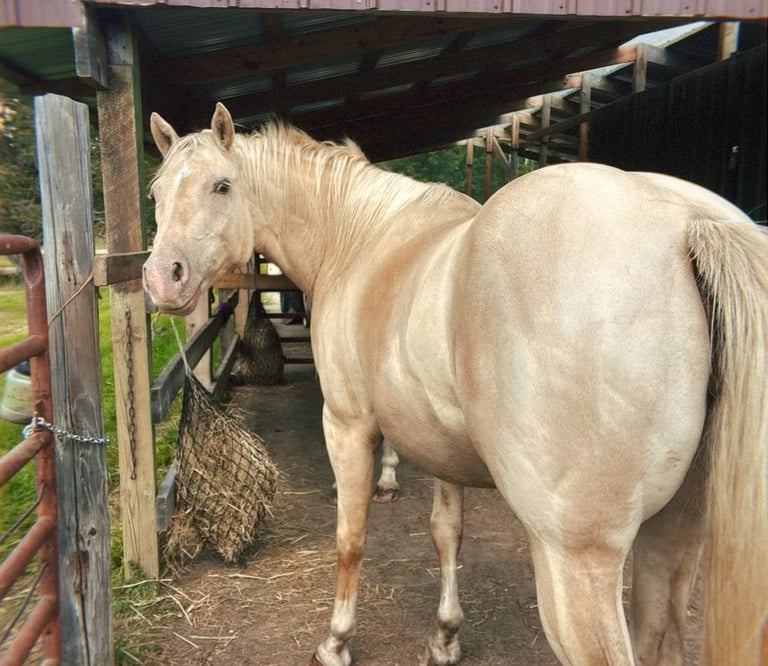
When we found out our Quarter Horse mare, Peach, was expecting her first foal, we were incredibly excited—and a little overwhelmed.
Neither of us had assisted with one of our own mares foaling before. While we had years of experience around horses, we knew foaling was something we wanted to prepare for as thoroughly as possible. We spent months reading books, watching experienced breeders, talking with our veterinarian, and slowly gathering supplies so we wouldn't be scrambling if labor started unexpectedly.
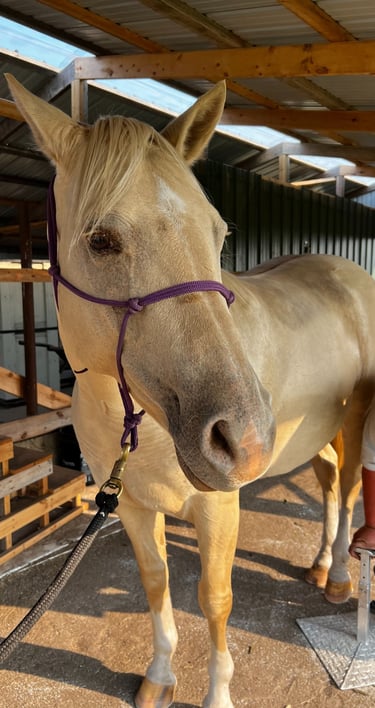
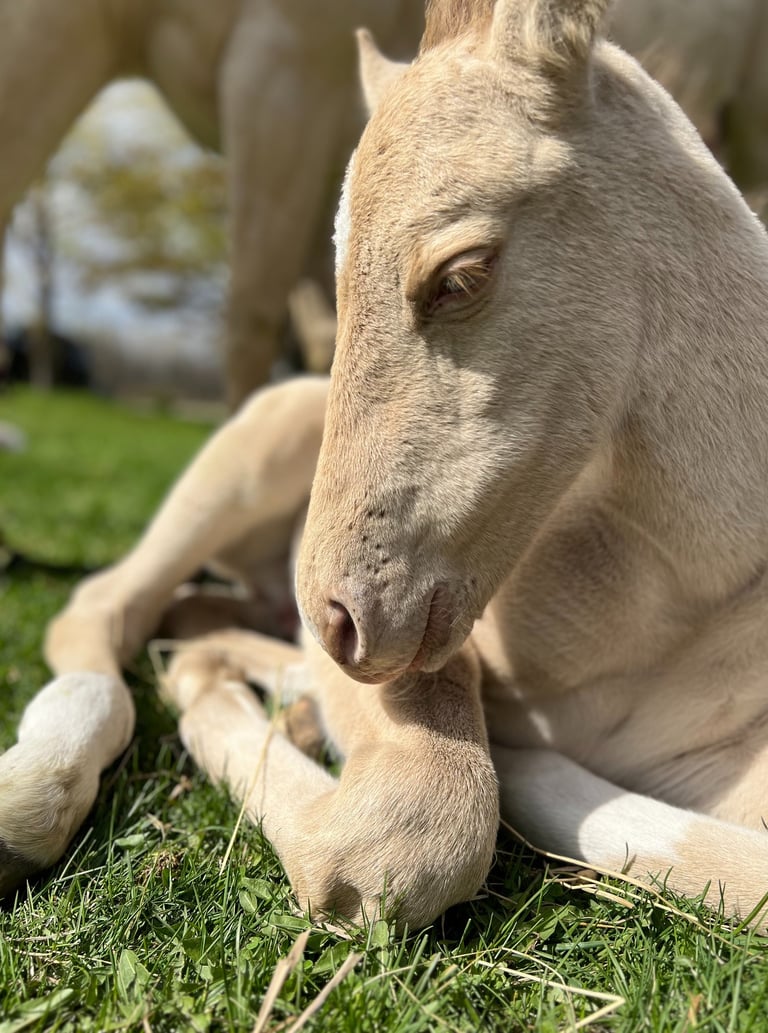
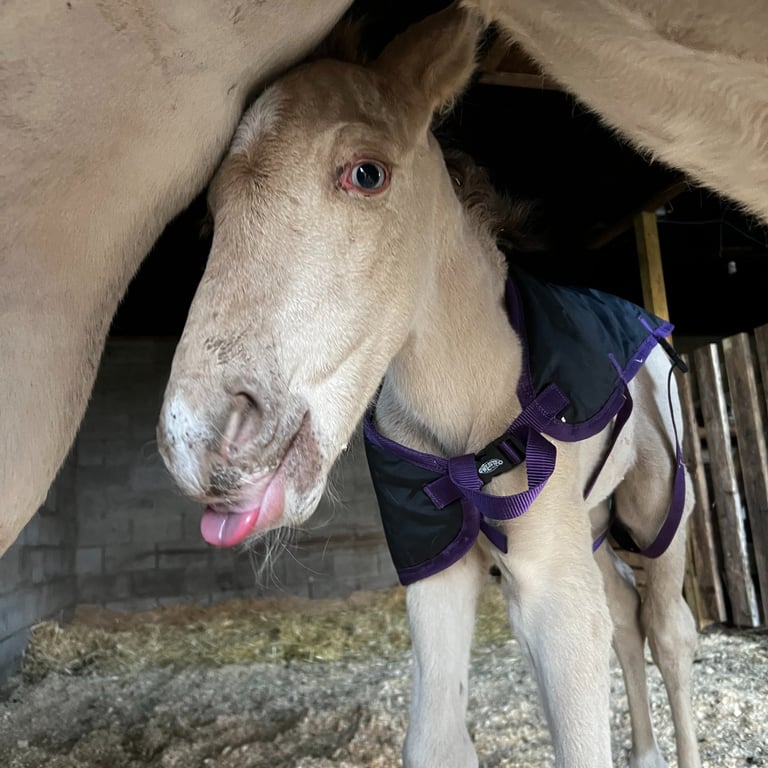
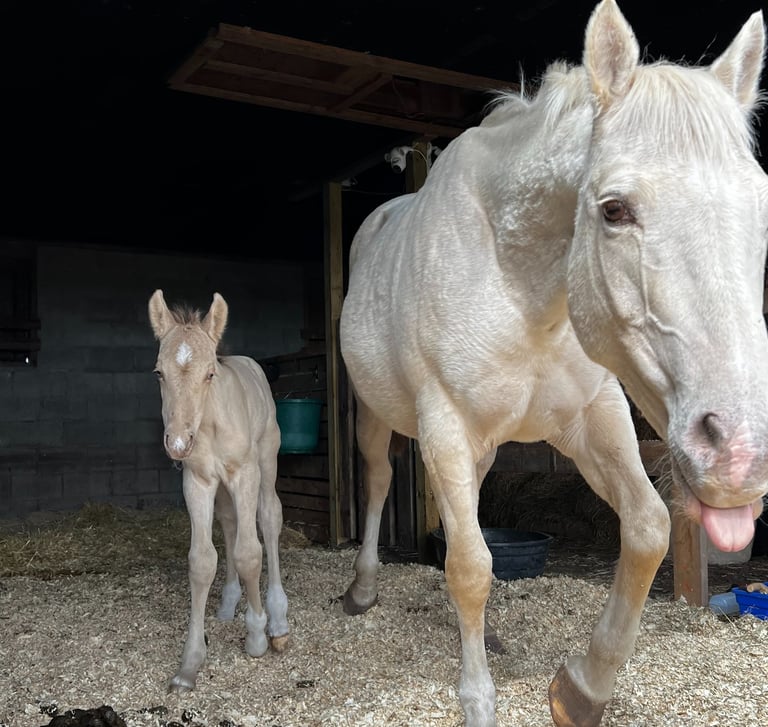
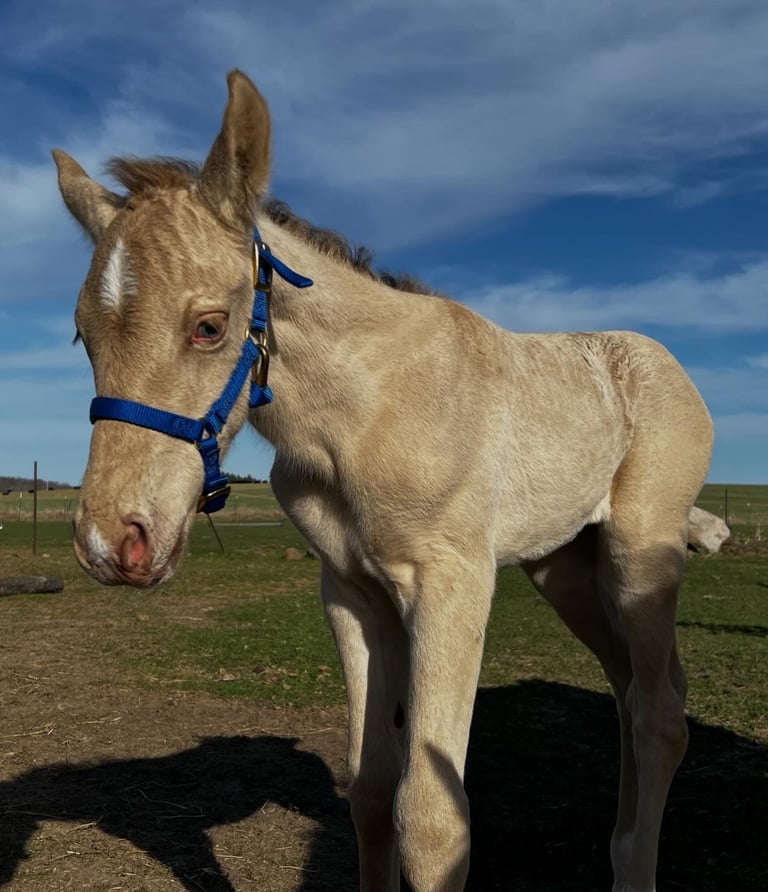
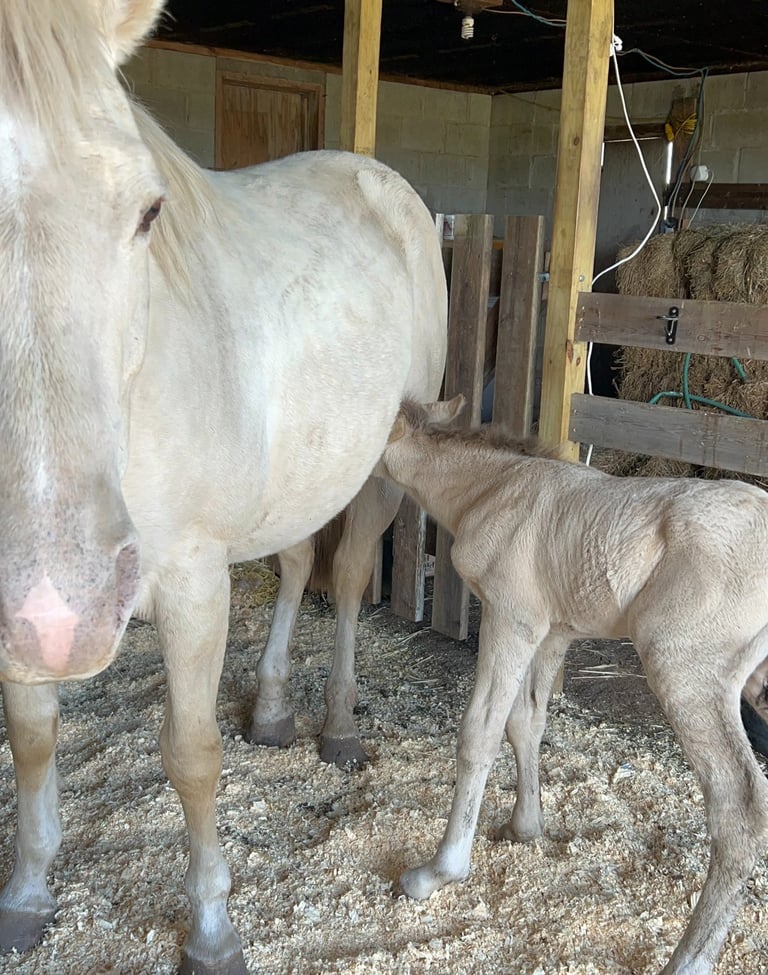
Thankfully, when Peach welcomed her healthy colt on April 28, everything went beautifully. Most of the supplies in this tote were never needed, and honestly, I'm grateful for that. But having everything organized and ready gave us tremendous peace of mind.
This isn't meant to be veterinary advice or a definitive checklist for every mare. Every horse and every foaling situation is different. Instead, I'm sharing what we chose to keep on hand, why we included each item, and what we learned throughout the process. I hope it helps another horse owner feel a little more prepared.
Building Our Foaling Kit
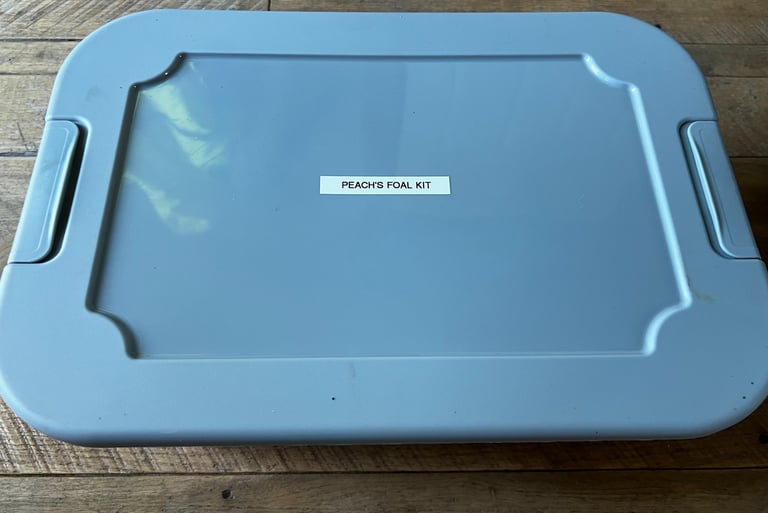
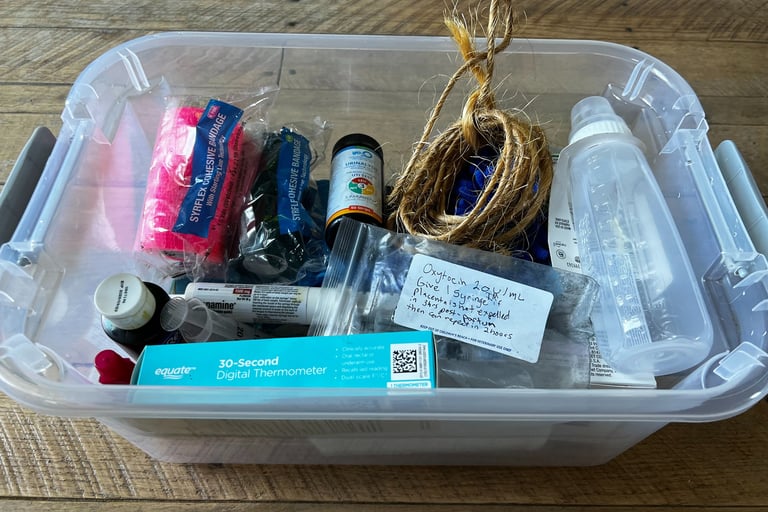
One of the best decisions we made was keeping everything together in one clearly labeled plastic tote.
When a mare goes into labor, the last thing you want is to be searching through cabinets for gloves or wondering where the thermometer ended up. Having everything in one place meant we could stay focused on Peach instead of looking for supplies.
Monitoring Supplies
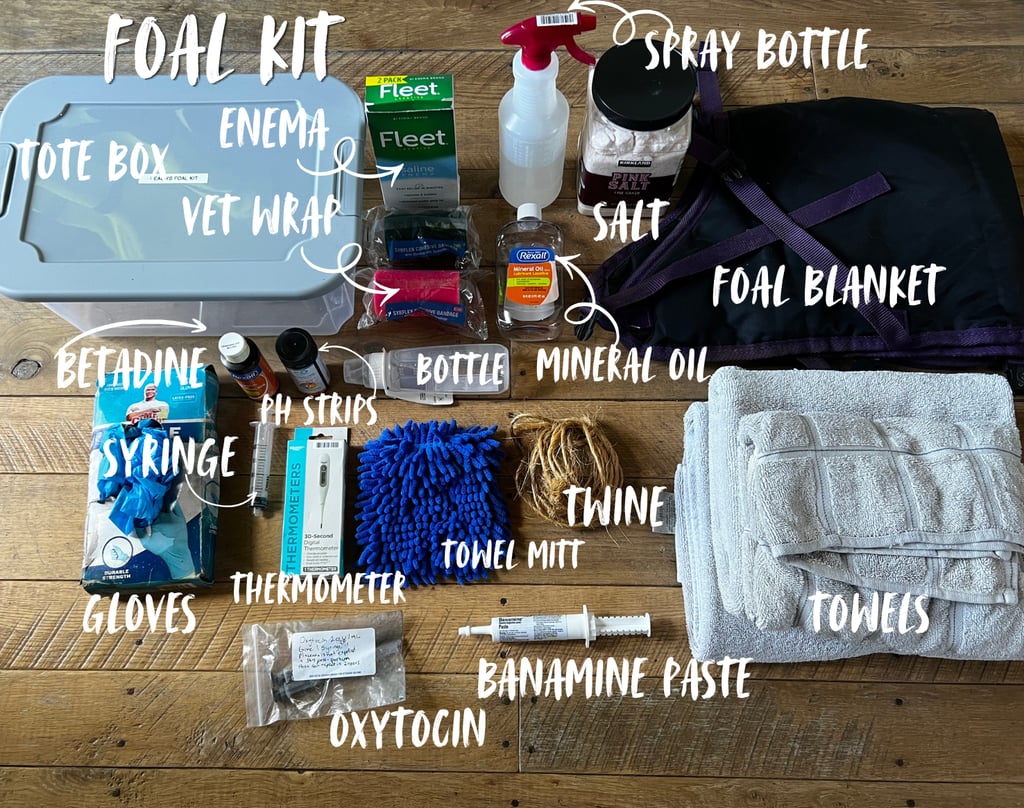
~Digital Thermometer
One of the simplest but most important tools. If something ever feels "off," your veterinarian will likely ask for your mare's or foal's temperature early in the conversation.
~Milk pH Test Strips
As Peach got closer to foaling, we began testing her milk. While pH isn't a perfect predictor, it gave us another piece of information alongside her physical changes and behavior. As the pH dropped, we knew we were getting closer. As A general Rule of thumb, when it drops to 6.4 or less, usually foaling will happen within 12-72 hrs, depending on the mare.
Foal Care Supplies
~Enema
Newborn foals should pass their first manure (called meconium) within the first several hours after birth. Having an enema on hand meant we were prepared if our veterinarian recommended using one.
~Iodine & Syringes
We used syringes to make dipping the umbilical stump cleaner and easier. Pre-filling them ahead of time saved us fumbling with bottles after the foal arrived.
~Mineral Oil in Spray Bottle
A tip we learned from experienced breeders was lightly spraying the foal's hindquarters to help prevent sticky meconium from matting in the hair.
~Foal Blanket
We live in Northern Minnesota, where foaling season runs anywhere from February to August. Peach's Due date was mid-April, when we still deal with Spring freezes. Especially since temps can drop quite low at night, even in more temperate climates, I would always recommend having a foal blanket.
~Baby Bottle (one meant for livestock ideally)
On the off chance that baby and mom are separated, or baby is unable to nurse from mom, baby needs to get the colostrum within a couple of hours. Having a bottle on hand would be helpful, thankfully we had no issues and did not need to use it.
Mare Care Supplies
~Vet Wrap
Wrapping up a Mare's tail can be helpful in keeping things clean and more sanitary, plus easier to clean up after the baby is born. It can also, in some cases, cause the mare to want to rub it off and could rub out a foal alert (if you are using one). So maybe wait to wrap her tail until she's very close to labor.
~Baling twine
Very useful for tying up the placenta when being passed, ball it up to make it heavier and easier to pass. It also prevents the mare from stepping on and tearing or pulling it out.
~Gloves
Helpful to keep things cleaner/more sterile, normal gloves, as well as elbow-length gloves
~Towels
You will be using a lot of towels! Wiping yourself off, wiping baby off, wiping mom off, the more towels the better! We use all the old towels we've had that are torn or stained. Just make sure they have all been washed and are clean/dry.
~Needles/Syringes/sterilizing equipment/sharps containers
for administering medication and disposing of sharps properly
~Salt
Add a little extra salt (as allowed by your vet) to your mare's feed. It will encourage drinking as your mare is going through a lot of fluids! It also has a surprising use: if mom is having difficulty cleaning and stimulating baby, especially due to distracting contractions, sprinkle a little salt on baby's coat. It may also help encourage her to start licking them.
~Straw
Clean, fresh bedding helps maintain a healthy environment for both Mom and Baby and reduces risks of infections and other complications. I prefer wood shaving or straw.
~Muck Buckets
You will appreciate having multiple close by! Use one to hold the placenta once it's passed so the vet can inspect and ensure the entire placenta is intact and passed. Keeping the stall area free of manure is a lot easier when you have a muck bucket right there to collect it.
Medications
We discussed these medications with our veterinarian before foaling and only planned to use them under their guidance. Every mare is different, so be sure to develop a plan with your own veterinarian before foaling season.
~Banamine Paste or IV
It can be helpful if the mare is in a lot of pain, really should not be given until the mare has passed the placenta, as it can reduce contractions.
~Oxytocin
It can be useful for passing the placenta if it has not fully passed within 3 hours; it can also encourage mom if she is having trouble connecting with her baby.
Again, please do not take this as instruction; always speak with your vet about any treatments or medications.
Looking back, I don't regret packing a single item, even though we only used a handful of them. Preparing this kit wasn't about expecting something to go wrong—it was about giving ourselves the confidence to stay calm if it did.
Thankfully, Peach delivered a healthy colt with very little intervention from us. That's exactly what we hoped for.
Today, the tote is cleaned, restocked, and ready for the next foaling season. I hope sharing what's inside helps another horse owner feel just a little more prepared for one of the most exciting days they'll experience.
Every mare and every foaling is different. This is simply what worked for us after months of preparation, learning from experienced horsemen, and working closely with our veterinarian.
I would absolutely love to hear how your experiences went! Please feel free to reach out with your stories, suggestions, pictures, and thoughts!
📄 Free Printable
Planning for a foal?
I've created a printable version of our complete foaling kit checklist that you can keep in your barn or tack room.
You can also check out the complete list I've put together on Amazon here--> https://amzn.to/452d8eR
https://www.amazon.com/hz/wishlist/ls/2KQ6DWCD5M05W?ref_=wl_share
The Strawflower Cottage
Growing things worth preserving.
© 2026 The Strawflower Cottage-Recorded only after it has been lived.
Quiet domesticity - stewardship - self-reliance